Tag: PBM

The Dallas Health Plan, Part 1: 99% Accurate – – But 99% of What? | Mark Cuban, Chris Deacon, Marilyn Bartlett (Ep. 57 – Part 1 of 3)

The Dallas Health Plan, Part 1: 99% Accurate – – But 99% of What? | Mark Cuban, Chris Deacon, Marilyn Bartlett (Ep. 57 – Part 1 of 3)


Subscribe to my YouTube Channel for a lot more: http://www.youtube.com/@BenefitWhisperer

The City of Dallas is facing rising healthcare costs and the possibility of higher costs or reduced benefits for employees. 
But before making those decisions, there’s a more fundamental question: 

Can the people paying the bills actually see and verify what they’re paying for? 

In Part 1 of this special three-part series of The Benefit Whisperer, Ralph Weber is joined by Mark Cuban, Chris Deacon, and Marilyn Bartlett 
to examine the City of Dallas health plan through the lens of claims visibility, audit rights, contract accountability, and active health-plan management. 

The conversation explores: 

• What does a “99% claims accuracy rate” actually measure? 
• Why claim-count accuracy and claim-dollar accuracy are very different 
• What Mark Cuban found after obtaining and reviewing the Dallas health-plan contract 
• Whether limiting an audit to a small number of claims gives a plan meaningful oversight 
• Why employers need access to their underlying claims data 
• How Marilyn Bartlett approached claims, banking, and large-case management in Montana 
• Why Chris Deacon believes employers must look beyond headline administrative fees and examine the actual contract terms 
• Why Mark argues healthcare needs to be managed like any other major business expense 

One of the central questions in this episode is simple: 

Before asking employees to pay more, shouldn’t the organization funding the health plan know exactly where the money is going? 

This is Part 1 of 3. 
Part 1: What Dallas Can’t See - and Why That Matters 
Part 2: What’s Buried in the Contract and Incentives 
Part 3: How Dallas - and Other Employers - Take Back Control 

Subscribe for Parts 2 and 3: Subscribe to my YouTube Channel and watch the video podcast!

Guests: 
Mark Cuban - Entrepreneur and Co-Founder of Mark Cuban Cost Plus Drug Company 
Chris Deacon - Healthcare attorney and former Director of the New Jersey Division of Pensions & Benefits 
Marilyn Bartlett, CPA - Nationally recognized healthcare cost-containment leader and former administrator of the Montana Employee Health Plan 

Host: 
Ralph Weber | The Benefit Whisperer | Route Three
“This Should Be Illegal,” Mark Cuban on U.S. Healthcare (Ep. 49)

“This Should Be Illegal,” Mark Cuban on U.S. Healthcare (Ep. 49)

Episode Overview

In this episode of The Benefit Whisperer, Ralph Weber sits down with Mark Cuban, David Scheinker, and Dr. Kevin Schulman to expose how healthcare pricing really works in the United States.

This is not theory.

It’s a direct look at:

  • Facility fees
  • 340B program dynamics
  • Insurance-driven pricing
  • And why patients and employers rarely know what they’ll pay

At one point, Cuban compares healthcare billing to:

Charging $3 for a beer… and $5,000 for the cup.

Key Topics 

Healthcare Pricing & Transparency

  • Why medical pricing is often unknown until after care
  • How contracts define process, not actual payment amounts

Insurance & Incentives

  • How insurers and intermediaries profit from complexity
  • Why delays, denials, and negotiations are built into the system

Hospital Revenue Models

  • The role of facility fees in cost inflation
  • How programs like 340B influence pricing behavior

Employer Impact

  • Why employers are funding the system, but lack visibility and control
  • The disconnect between plan design and actual outcomes

Potential Solutions

  • Direct contracting models
  • Transparent pricing strategies
  • Simplified, digitally defined agreements

Key Takeaway 

The U.S. healthcare system is not unpredictable by accident. It’s structured in a way where complexity and lack of transparency directly support revenue generation.

Guests & Contact Information

Ralph Weber
Host, The Benefit Whisperer
🌐 https://mybenefitssuck.com

📧ralph@thebenefitwhisperer.com

Mark Cuban
Founder, Cost Plus Drugs
📧 mark@costplusdrugs.com

Dr. David Scheinker
Executive Director of Systems Design and Collaborative Research, Stanford Lucile Packard Children’s Hospital
Founder & Director, SURF (Stanford Medicine)
🌐www.surf.stanford.edu

📧 www.linkedin.com/in/david-scheinker/

Kevin Schulman
Professor of Medicine and Health Policy, Stanford University
Faculty Director, Stanford Clinical Excellence Research Center
📧 kevin.schulman@stanford.edu

Produced by Kathrine Mowrey (Content & Distribution)

Money From Sick People: How PBMs Use AWP, Spread, and Rebates to Inflate Drug Costs (Ep.43)

Money From Sick People: How PBMs Use AWP, Spread, and Rebates to Inflate Drug Costs (Ep.43)

PBMs promise big “discounts,” but what if those discounts are calculated off inflated prices? In this episode of The Benefit Whisperer, Ralph Weber interviews Antonio Ciaccia (46brooklyn Research / Three Axis Advisors) to decode the drug pricing alphabet soup, AWP, MAC, NADAC, rebates, and GPOs, and explain how incentives inside the pharmacy supply chain can drive costs up while still claiming “savings.”

Antonio shares why AWP remains the bedrock of legacy PBM contracting, how generic pricing can become a “Wild West,” and why rebates often amount to “money from sick people,” especially for members in high-deductible plans. Practical, plain-English steps for employers: understand compensation, get your full contract, and demand itemized claims data.

00:00 Unveiling the Pharmacy Benefits World

01:42 Antonio’s Journey into Drug Pricing

04:23 Understanding AWP and Its Implications

09:40 The Illusion of Discounts in Drug Pricing

13:06 The Role of PBMs in Drug Pricing

17:02 Challenges in Changing PBM Contracts

20:42 The Financial Incentives of PBMs

22:54 PBM Dysfunction in the Broader Healthcare Context

25:34 The Role of PBMs in Drug Pricing

27:57 Empowering Employers in Drug Cost Management

32:46 Decoding Drug Pricing Acronyms

36:30 The Impact of GPOs and Rebates on Drug Costs

41:44 Understanding the Burden on Patients and Employers

Ralph Weber, The Benefit Whisperer
Share with a colleague. Email ralph@thebenefitwhisperer.com · (832) 924-3330 · fixmybenefitsnow.com · Schedule a free 15 minute consultation

America’s $1 Trillion Healthcare Problem: David Sheinker on How to fix it (Ep. 15)

America’s $1 Trillion Healthcare Problem: David Sheinker on How to fix it (Ep. 15)

What if the real problem with American healthcare isn’t medical but the familiar broken system that keeps your costs rising year after year? In this episode of The Benefit Whisperer, Ralph Weber sits down with Dr. David Scheinker, Founder and Director of SURF Stanford Medicine, to unpack:

Why rising costs are baked into the insurance model

How digitization, wearables, and standard contracts could finally cut the waste

What smart employers are doing now to fight back without waiting on Washington

If you’re an employer tired of paying for inefficiency and administrative games this conversation is your roadmap to do better.

👉 Watch the full episode and share it with your team.

👉 Subscribe to The Benefit Whisperer for real solutions.

👉 Book a free consultation with Ralph: https://bit.ly/3T6TUz0

👉 Follow David Sheinker’s work or get in touch: https://surf.stanford.edu/

Learn more: https://www.thebenefitwhisperer.com


00:00 Introduction to Healthcare Reform

01:23 The Vision for a Smarter Healthcare System

04:04 The Ma Bell Problem in Insurance

05:22 Insurance Profits and Healthcare Spending

06:26 The Medical Loss Ratio and Its Consequences

09:24 The Role of Competition in Healthcare

11:00 Direct Contracts and Innovative Health Plans

11:59 The Impact of TPAs and PBMs

13:02 Complexity and Transparency in Healthcare

15:33 Empowering Employers in Healthcare Decisions

17:43 Digital Medicine and Remote Patient Monitoring

19:12 Standardization in Healthcare Contracts

22:51 Medicare Advantage: Reform or Privatization?

24:18 Healthcare as a Human Right

25:37 Policy Tools for Healthcare Reform

27:31 Myths About Healthcare Reform

28:44 Final Thoughts on Healthcare Efficiency

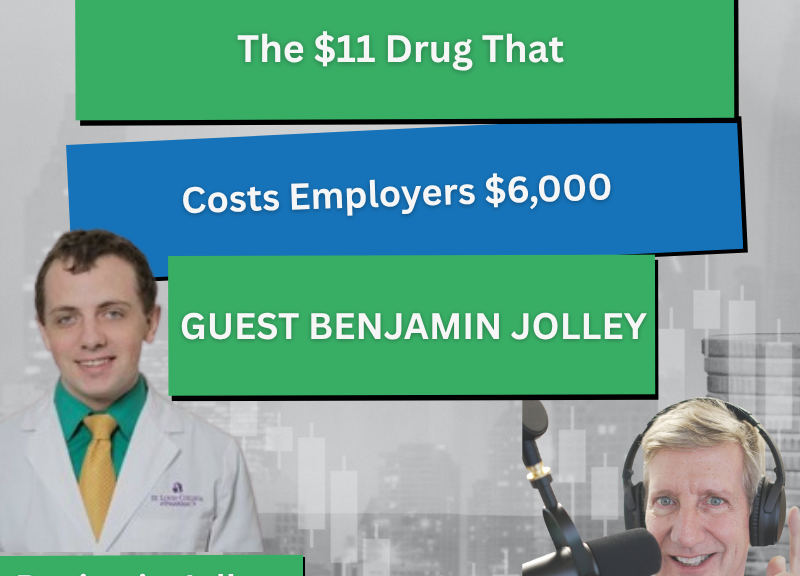
The $11 Drug That Costs Employers $6,000 (Ep. 11)

The $11 Drug That Costs Employers $6,000 (Ep. 11)

In this episode of The Benefit Whisperer, Ralph Weber and pharmacist Benjamin Jolley delve into the complexities of prescription drug costs, focusing on how employers can navigate pharmacy benefits management (PBM) to save money. They discuss the significant savings achieved by New Jersey, the impact of drug pricing strategies, and the legal implications for employers regarding PBM contracts. The conversation emphasizes the importance of employers being proactive in managing their pharmacy benefits to avoid costly pitfalls and ensure fair pricing for medications.

Chapters

00:00 Introduction to Prescription Drug Costs
03:25 Conclusion and Future Considerations

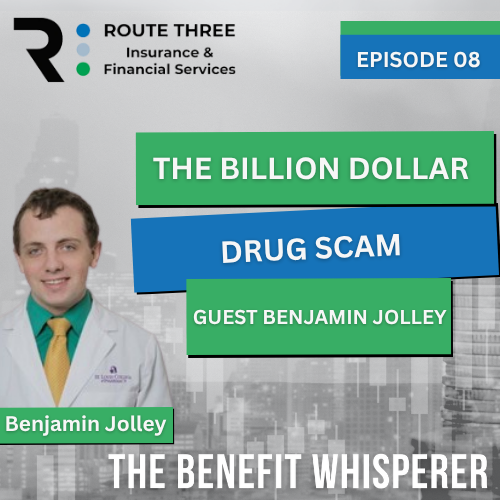
The Billion Dollar Drug Scam (Ep. 8)

The Billion Dollar Drug Scam (Ep. 8)

Why Are Prescription Drugs So Expensive? The Truth About PBMs, Spread Pricing & What Employers Can Do

In this eye-opening episode of The Benefit Whisperer, host Ralph Weber sits down with pharmacist and reform advocate Benjamin Jolley to expose the hidden forces behind America’s skyrocketing prescription drug costs. 💊

From shocking stories of $1,800 bills for $140 drugs to the disturbing influence of pharmacy benefit managers (PBMs) and their spread pricing schemes, this conversation breaks down complex systems with clarity—and urgency.

🔥 Highlights include:

  • Why the U.S. pays more for drugs than almost any other nation
  • How a New Jersey benefits plan saved $1 BILLION just by rewriting its contract
  • The dangerous power of vertically integrated PBMs like CVS Caremark
  • The recent bipartisan push by 39 state Attorneys General to break up monopolies
  • How employers and CFOs can protect themselves from being held personally liable

If you’re an employer, benefits administrator, policymaker—or just someone wondering why your prescriptions are so expensive—this is a must-watch.

📌 Chapters:
0:00 – Welcome + Prescription Drug Teaser
0:41 – Meet Benjamin Jolley
1:00 – Why Prescription Costs Are So High
4:00 – What Is Spread Pricing? (Shocking Example)
8:00 – Silencing Critics: Non-Disparagement and Audits
13:00 – What Should Employers Be Paying Per Member?
17:40 – 39 Attorneys General Demand PBM Reform
21:00 – New Jersey’s $1B Savings by Rewriting a PBM Contract
25:00 – Closing Thoughts + How to Reach Benjamin