Category: Business Owner

Healthcare Is Infrastructure, Not a Money Machine | Dr. Sheri Mancini (Ep. 58)

Healthcare Is Infrastructure, Not a Money Machine | Dr. Sheri Mancini (Ep. 58)

What if America’s healthcare system isn’t broken? What if it’s working exactly as its financial incentives encourage it to work?

American healthcare costs keep climbing, patients struggle to access affordable care, and employers are left paying increasingly expensive bills. But what if we’ve been asking the wrong question about how to fix it?

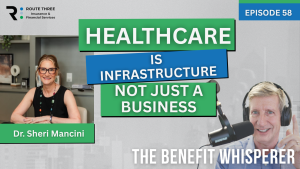
In Episode 58 of The Benefit Whisperer, host Ralph Weber sits down with Dr. Sheri Mancini, a surgeon, U.S. Navy veteran, author, and healthcare reform advocate who believes we need to fundamentally rethink how healthcare is governed in America.

Her central argument is compelling: Healthcare should be treated as essential infrastructure, much like electricity, transportation, and other systems our society depends on – not simply as another industry driven by financial returns.

After years of practicing medicine and witnessing increasing administrative complexity, Dr. Mancini began researching how other developed capitalist countries manage their healthcare systems. What she discovered challenged many of the assumptions Americans make about healthcare reform.

In this episode, Ralph and Dr. Mancini explore:

*Why American healthcare often functions more like a financial system than a medical care system.

*How insurance denials, prior authorizations, and administrative friction can create financial incentives that conflict with patient care.

*Why treating healthcare as essential infrastructure could change how the system operates.

*What Switzerland and the Netherlands can teach America about balancing competition, accountability, and access to care.

*How healthcare costs and complexity affect employers, workers, and America’s economic competitiveness.

*Why greater transparency and better-aligned incentives are essential to meaningful reform.

*Ralph and Sheri also challenge one another on the role of free-market competition, regulation, and government oversight – and discuss why healthcare reform doesn’t have to be a choice between the current system and government-run medicine.

The fundamental question: Is American healthcare designed to improve people’s health – or maximize financial returns?

For CEOs, CFOs, HR leaders, benefits professionals, and anyone frustrated by rising healthcare costs, this conversation offers a different perspective on what meaningful reform could look like. 

Dr. Mancini is the author of the book: Healthcare as Infrastructure: A Constitutional Approach to Reform

About The Benefit Whisperer

Hosted by Ralph Weber of Route Three Insurance & Financial Services, The Benefit Whisperer exposes the financial incentives, hidden costs, and structural problems driving American healthcare spending – and explores how employers can take back control while protecting access to quality medical care.

Subscribe for conversations with physicians, healthcare economists, policy experts, and industry leaders working to make American healthcare more transparent, affordable, and accountable.

Join the conversation: Should healthcare be treated as essential infrastructure? 
YouTube Channel

Substack

LinkedIn


The Dallas Health Plan, Part 3: Take Back Control of the Money | Mark Cuban, Chris Deacon, Marilyn Bartlett (Ep. 57 – Part 3 of 3)

The Dallas Health Plan, Part 3: Take Back Control of the Money | Mark Cuban, Chris Deacon, Marilyn Bartlett (Ep. 57 – Part 3 of 3)

Subscribe to my YouTube channel for a lot more: https://www.youtube.com/@BenefitWhisperer

After examining claims visibility and the contract itself, Part 3 asks the most important question: Who should actually be responsible for managing the money?

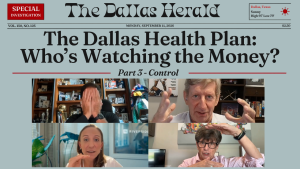
In the final installment of our three-part series on the City of Dallas health plan, Ralph Weber is joined by Mark Cuban, Chris Deacon, and Marilyn Bartlett to move from diagnosis to possible solutions.

The discussion focuses on what active health-plan management could look like for Dallas and for other employers and public entities funding their own healthcare plans.

Mark Cuban argues that organizations need dedicated expertise capable of reviewing healthcare spending as it happens – rather than relying primarily on audits after the fact. Chris Deacon raises a broader question about how much administration and control public plans should outsource. Marilyn Bartlett brings the conversation back to a fundamental accounting principle: if an employer funds a claim, it should be able to reconcile that funding to what was actually paid.

In this episode:

  • Why healthcare spending should be treated as a major financial responsibility, not simply an HR function
  • Why Mark believes employers need dedicated health-plan expertise
  • Why managing large claims in real time may be more valuable than discovering problems later through an audit
  • The importance of preserving data, RFP, and contractual rights before claims are paid
  • Whether public employers should consider retaining more administrative capability and control
  • How AI and better technology may help – and why expertise still matters
  • Why “disruption” should not automatically be treated as a negative in healthcare
  • The basic accounting question every self-funded employer should be able to answer: Can you reconcile what you funded to what was actually paid?
  • Why long-term healthcare contracts need to account for changing requirements
  • What Mark says employers can gain by taking a more active role in managing healthcare

This is Part 3 of 3 in The Dallas Health Plan: Who’s Watching the Money?

Part 1 – Visibility: What can Dallas actually see?

Part 2 – Contracts & Incentives: What does the fine print actually permit?

Part 3 – Control: What should Dallas and other employers do about it?

Guests:

Mark Cuban – Entrepreneur and Co-Founder of Mark Cuban Cost Plus Drug Company

Chris Deacon – Healthcare attorney and former Director of the New Jersey Division of Pensions & Benefits

Marilyn Bartlett, CPA – Nationally recognized healthcare cost-containment leader and former administrator of the Montana Employee Health Plan

Host:

Ralph Weber | The Benefit Whisperer | Route Three


If this series has changed the way you think about healthcare purchasing, share it with a CEO, CFO, HR leader, benefits professional, public official, or anyone responsible for managing a self-funded health plan. Subscribe to my YouTube Channel as we address more in the healthcare world! https://www.youtube.com/@BenefitWhisperer/

Subscribe to my Substack: https://substack.com/@thebenefitwhisperer

Follow my LinkedIn:  https://www.linkedin.com/in/ralphweber/

Music licensed through Soundstripe.

Code: YTA6TLJZGWC58KTH

The Dallas Health Plan, Part 2: What’s Hiding in the Contract? | Mark Cuban, Chris Deacon, Marilyn Bartlett (Ep. 57 – Part 2 of 3)

The Dallas Health Plan, Part 2: What’s Hiding in the Contract? | Mark Cuban, Chris Deacon, Marilyn Bartlett (Ep. 57 – Part 2 of 3)

Subscribe to my YouTube Channel for a lot more:  http://www.youtube.com/@BenefitWhisperer

The headline fee is not always the whole deal. The contract determines what the employer actually agreed to.

In Part 2 of our three-part series on the City of Dallas health plan, Ralph Weber is joined by Mark Cuban, Chris Deacon, and Marilyn Bartlett to examine the contract structures, payment arrangements, fees, and incentives that employers and public plans need to understand before signing an agreement.

The discussion begins with Chris Deacon explaining why the most important provisions may not be found where an employer expects them – and why reading the fine print matters. From there, the conversation moves into large-claim management, hospital payment arrangements, PBM and ASO compensation, procurement practices, and the importance of understanding who is being paid, how they are being paid, and what authority the plan sponsor has retained.

In this episode:

  • Why contract exhibits and negotiated provisions matter
  • Why large claims should be reviewed in real time
  • The difference between an aggregate discount guarantee and what may happen on an individual high-cost claim
  • Why employers should focus on the actual price paid – not simply the percentage discount
  • How PBM and ASO compensation can affect incentives
  • What Chris Deacon learned from New Jersey’s procurement approach
  • Why Mark Cuban believes vendors should be paid for the services they actually provide
  • How RFP design can shape the outcome before negotiations even begin
  • Why employers should understand prior authorization, denials, related entities, and potential conflicts
  • Why Marilyn Bartlett says plan sponsors cannot simply sign the contract and walk away

The episode closes with a basic but powerful reminder:

It’s your money.

If an employer or public entity is funding the health plan, it should understand the contract, the incentives, the payment flows, and the rights it has retained.

This is Part 2 of 3:

Part 1 – Visibility: What can Dallas actually see?
Part 2 – Contracts & Incentives: What does the fine print actually permit?
Part 3 – Control: What should Dallas and other employers do about it?

Guests:
Mark Cuban – Entrepreneur and Co-Founder of Mark Cuban Cost Plus Drug Company
Chris Deacon – Healthcare attorney and former Director of the New Jersey Division of Pensions & Benefits
Marilyn Bartlett, CPA – Nationally recognized healthcare cost-containment leader and former administrator of the Montana Employee Health Plan

Host: Ralph Weber | The Benefit Whisperer | Route Three

Subscribe for Part 3, where the conversation turns from identifying the problems to what Dallas – and other employers – can actually do differently.
Subscribe to my YouTube Channel:  http://www.youtube.com/@BenefitWhisperer

Music licensed through Soundstripe.
Code: YTA6TLJZGWC58KTH