Ralph Weber sits down with Nurse Deb Ault, a former ICU nurse who walked away from the bedside after a patient died due to profit-driven care. She now runs AIMM, a patient-centered care management firm with a 3% denial rate and Validation Institute–verified results. They talk PPO discount myths, P3CM, proactive navigation, and why DPCs are turning to AIMM to close the gap. If you’re tired of feeding a broken system, this one’s for you.
What if the real problem with American healthcare isn’t medical but the familiar broken system that keeps your costs rising year after year? In this episode of The Benefit Whisperer, Ralph Weber sits down with Dr. David Scheinker, Founder and Director of SURF Stanford Medicine, to unpack:
Why rising costs are baked into the insurance model
How digitization, wearables, and standard contracts could finally cut the waste
What smart employers are doing now to fight back without waiting on Washington
If you’re an employer tired of paying for inefficiency and administrative games this conversation is your roadmap to do better.
👉 Watch the full episode and share it with your team.
👉 Subscribe to The Benefit Whisperer for real solutions.
👉 Book a free consultation with Ralph: https://bit.ly/3T6TUz0
👉 Follow David Sheinker’s work or get in touch: https://surf.stanford.edu/
Learn more: https://www.thebenefitwhisperer.com
00:00 Introduction to Healthcare Reform
01:23 The Vision for a Smarter Healthcare System
04:04 The Ma Bell Problem in Insurance
05:22 Insurance Profits and Healthcare Spending
06:26 The Medical Loss Ratio and Its Consequences
09:24 The Role of Competition in Healthcare
11:00 Direct Contracts and Innovative Health Plans
11:59 The Impact of TPAs and PBMs
13:02 Complexity and Transparency in Healthcare
15:33 Empowering Employers in Healthcare Decisions
17:43 Digital Medicine and Remote Patient Monitoring
19:12 Standardization in Healthcare Contracts
22:51 Medicare Advantage: Reform or Privatization?
24:18 Healthcare as a Human Right
25:37 Policy Tools for Healthcare Reform
27:31 Myths About Healthcare Reform
28:44 Final Thoughts on Healthcare Efficiency
Why Insurers Profit from Complexity and you Pay the Price with Guest David Scheinker (Ep. 14)
🎧 Episode 14: Dr. David Scheinker on Why Healthcare’s Complexity Isn’t an Accident
This week on The Benefit Whisperer, Ralph Weber is joined by Stanford’s Dr. David Scheinker, a leading voice in healthcare engineering and reform, to break down the $1 trillion in administrative waste baked into the U.S. healthcare system.
From vague insurance denials to year-long billing delays, Dr. Scheinker explains why these inefficiencies aren’t glitches, they’re features of a system designed to protect profits, not patients.
🔍 In this episode:
Why it took a year to bill for a pre-approved procedure
How AI is being used to fight appeals and deny claims
What the mortgage industry can teach healthcare
The root cause of system-wide complexity—and who benefits from it
If you’ve ever wondered why fixing healthcare feels impossible, this conversation offers rare clarity—and hope.
For benefits plans that eliminate waste and put employers back in control, visit routethree.com
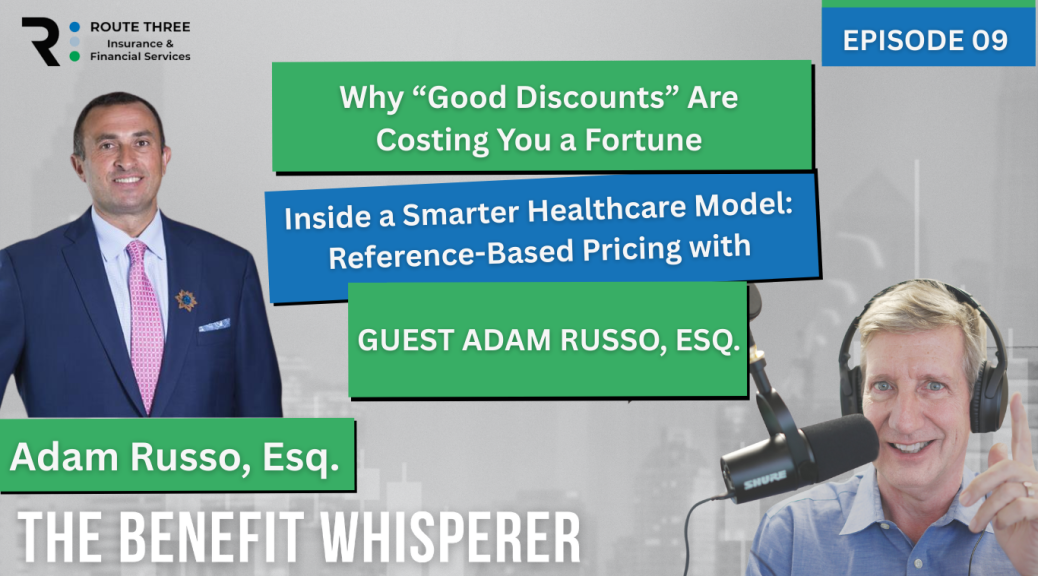
Why “Good Discounts” Are Costing You a Fortune. Inside a Smarter Healthcare Model: Reference-Based Pricing with Adam Russo, Esq. (Ep. 9)
Is your PPO network actually saving you money—or just selling you a myth?
In this eye-opening episode of The Benefit Whisperer, host Ralph Weber sits down with Adam Russo, co-founder and CEO of The Phia Group, to expose the broken economics of traditional healthcare pricing. They dive deep into the real story behind Reference-Based Pricing (RBP), why most brokers avoid it, and how smart employers are slashing costs without cutting care.
✅ The truth about PPO “discounts” ✅ Why laziness—not logic—drives plan design ✅ How RBP protects patients from surprise billing ✅ What AI and price transparency mean for the future of healthcare
🎧 Whether you’re a CEO, benefits advisor, or just tired of rising deductibles and shrinking benefits, this episode will change how you think about cost, quality, and control in healthcare.